Questions to Ask Your Doctor Before Stem Cell Therapy
From easing joint pain to potentially treating chronic diseases, stem cell therapy is becoming a popular non-surgical treatment option.
Read More →
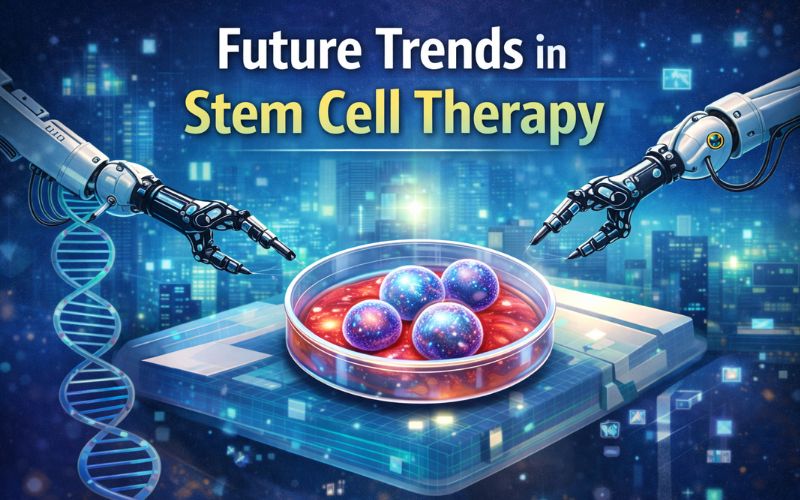
Stem cell therapy has rapidly evolved over the past few decades, transforming from a largely experimental field into a cornerstone of regenerative medicine. With its potential to repair, replace, or regenerate damaged tissues and organs, stem cell therapy has captured the attention of scientists, clinicians, and patients worldwide.
As research progresses, the future of stem cell therapy promises to bring even more groundbreaking treatments that could revolutionize healthcare. This article explores the emerging trends shaping the future of stem cell therapy and what patients and researchers can expect in the coming years.
Before exploring future trends, it is essential to understand the basics of stem cell therapy. Stem cells are unique cells capable of self-renewal and differentiation into various specialized cell types.
They are broadly classified into:
Stem cell therapy involves harnessing these cells to treat diseases, repair damaged tissues, or replace malfunctioning organs. Currently, therapies target conditions like blood disorders, certain cancers, neurodegenerative diseases, and orthopedic injuries.
One of the most promising trends in stem cell therapy is personalization. Traditional treatments often follow a “one-size-fits-all” approach, but patients respond differently due to genetic and environmental factors.
Personalized stem cell therapy involves creating patient-specific stem cells, often through induced pluripotent stem cells (iPSCs), to minimize immune rejection and improve treatment efficacy.
Researchers are exploring ways to engineer stem cells tailored to each patient’s genetic profile, leading to safer and more effective therapies.
This approach is particularly promising in oncology. For example, using a patient’s stem cells to generate immune cells that target cancer cells could improve the success of immunotherapies.
Neurodegenerative diseases such as Alzheimer’s, Parkinson’s, and amyotrophic lateral sclerosis (ALS) remain among the most challenging medical conditions.
Stem cell therapy offers hope by potentially replacing lost or damaged neurons and supporting neuroregeneration.
Future trends indicate a surge in clinical trials targeting these conditions using stem cells derived from iPSCs or neural stem cells.
Advances in gene editing technologies like CRISPR are also expected to enhance the effectiveness of stem cell therapies by correcting genetic mutations before transplantation.
Artificial intelligence (AI) and machine learning (ML) are transforming medical research, and stem cell therapy is no exception.
AI algorithms can analyze vast datasets from stem cell research to predict cell differentiation outcomes, optimize growth conditions, and identify potential therapeutic targets.
In the future, AI-driven systems may guide the development of patient-specific treatments, predict the success of stem cell transplantation, and monitor therapeutic outcomes in real time.
One of the most exciting developments in regenerative medicine is 3D bioprinting.
By combining stem cells with biocompatible materials, scientists can print tissue structures that mimic the architecture of human organs.
This technology could address the global shortage of organ donors and transform transplant medicine.
In the future, bioengineered organs such as the liver, kidney, or heart may become viable transplant options.
The method of delivering stem cells to the target site plays a crucial role in treatment success.
Traditional delivery methods may result in lower survival rates of transplanted cells. Emerging techniques focus on minimally invasive solutions that improve cell survival and integration.
These technologies are designed to enhance treatment effectiveness and reduce complications.
Another rapidly growing field is the use of stem cells in anti-aging therapies.
Aging is associated with reduced stem cell activity, leading to tissue degeneration and slower healing processes.
Scientists are studying ways to rejuvenate aging stem cells or replace them with younger, more active cells.
Early research suggests potential benefits in improving skin health, muscle strength, and cognitive function.
The future of stem cell therapy will also depend on global collaboration and improved regulatory frameworks.
Governments, research institutions, and biotechnology companies are working together to develop safe and effective stem cell therapies.
Regulatory agencies are also creating clearer guidelines to support innovation while protecting patients from unsafe treatments.
Stem cell therapy stands at the forefront of medical innovation, offering hope for treating numerous diseases and injuries.
Emerging trends such as personalized medicine, AI integration, neurodegenerative disease treatment, 3D bioprinting, and advanced delivery systems are set to transform the field.
While challenges remain, continuous research and technological advancements are bringing us closer to a future where stem cell therapy becomes safer, more effective, and widely accessible.
As the science of stem cells evolves, the vision of regenerating damaged tissues, curing previously untreatable diseases, and improving human longevity is becoming increasingly realistic.
From easing joint pain to potentially treating chronic diseases, stem cell therapy is becoming a popular non-surgical treatment option.
Read More →
Stem cell therapy sounds like something from a sci-fi movie, right? But it’s very real and it’s changing the way doctors treat everything from joint pain to serious diseases.
Read More →
Explore the newest breakthroughs in regenerative therapies and medical research.
Read More →
